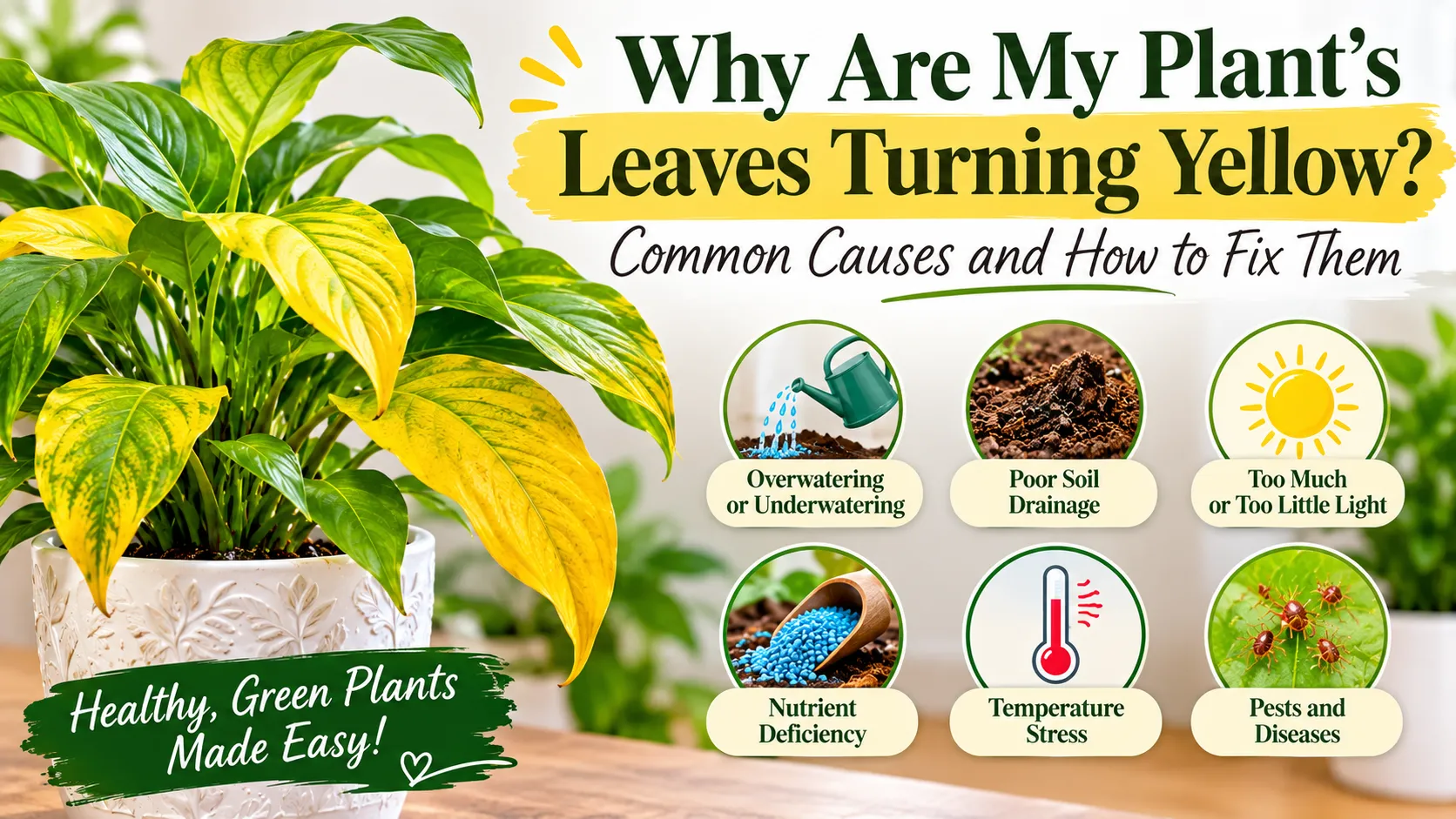

Yellow leaves are your plant’s way of telling you something is off, and the message is usually fixable. The most common cause is a watering problem, and it is more often too much water than too little. Light, nutrients, pests and natural aging come next. The fastest first step is to push a finger into the soil and notice which leaves are yellow, the old ones at the bottom or the new ones at the top. Those two clues narrow things down quickly.
If you are asking why your plant’s leaves are turning yellow, try not to panic. A plant can lose a few leaves and still recover well. Several causes look alike, so the sections below help you match what you see to a likely cause, with a clear next step for each.
Match What You See to the Likely Cause
| What you see | Likely cause | First thing to try |
|---|---|---|
| Lower leaves yellow and soft, soil stays wet | Overwatering or poor drainage | Pause watering and check the drainage holes and roots |
| Leaves yellow and crispy, soil bone dry | Underwatering | Water slowly until it drains, then check again in a few days |
| Whole plant pale, growth stretched or slow | Too little light | Move closer to a bright window with indirect light |
| Yellow between green veins | Nutrient shortage or mineral buildup | Review your feeding habits and flush the soil if needed |
| Yellow patches with crispy edges | Too much direct sun, dry air or fertilizer buildup | Move the plant back from the glass and check the soil surface |
| Yellow spots, speckles, webbing or sticky residue | Pests | Isolate the plant and inspect leaf undersides |
| One old lower leaf yellows now and then | Natural aging | Leave it alone until it comes off easily |
First, Look at the Pattern
Before changing anything, spend two minutes looking closely. The pattern on the plant tells you more than any single symptom. Ask yourself these questions:
- Old or new leaves? Lower, older leaves point toward watering, aging or a mobile nutrient like nitrogen. New growth turning yellow points more toward light, iron-type shortages or root trouble.
- Whole leaf, edges or spots? An evenly yellow leaf suggests water or nutrients. Yellow edges suggest dryness or buildup, and small spots suggest pests or sun damage.
- Soft or crisp? Soft, limp yellow leaves usually mean too much water. Dry, papery ones usually mean too little water, scorching or very dry air.
- Is the soil wet or dry an inch or two down? This single check separates the two biggest causes.
Write down what you notice, or take a quick photo for comparison later. It is easy to forget which leaves were affected first. Keep in mind that more than one cause can be at work at the same time.
Overwatering and Poor Drainage
This is the most common reason indoor plant leaves turn yellow. Roots need air as well as water. When soil stays soggy, roots struggle to breathe, begin to decay, and can no longer feed the leaves. The leaves then turn yellow, often starting low on the plant, and feel soft or limp.
Signs to look for:
- Soil that is still wet days after watering
- A musty or sour smell from the pot
- Soft, dark stems near the soil line
- A pot with no drainage hole, or one that sits in a saucer of standing water
- Fungus gnats hovering around the soil
To check the roots, slide the plant out of its pot. Healthy roots are firm and pale, often white or light tan. Rotting roots are brown or black, mushy, and may smell unpleasant.
What to do:
- Stop watering and let the top layer of soil dry out.
- Empty any water collecting in the saucer.
- If roots look healthy, put the plant back and water less often.
- If some roots are mushy, trim them off with clean scissors and repot into fresh, well-draining mix in a pot with drainage holes.
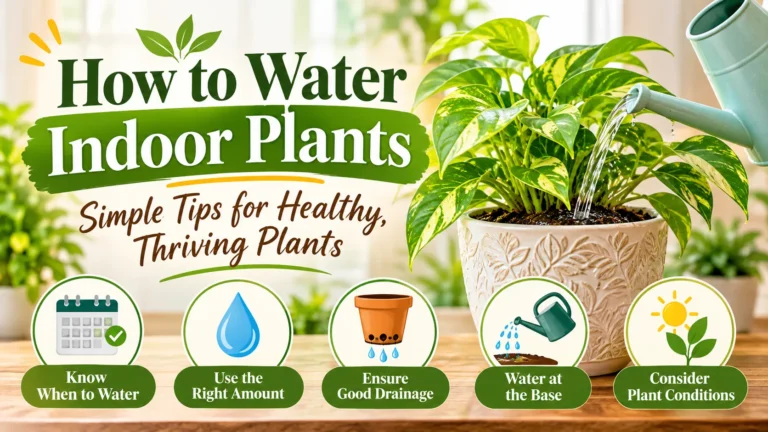
Our guide on how to water indoor plants explains the finger test and how to tell the signs apart, so you can find a rhythm that suits your plant.
In cooler homes, soil stays wet longer and plants grow more slowly, so they need water less often than you might expect. Heavy, dense soil and oversized pots hold moisture for a long time, which makes the problem worse.
Underwatering
A thirsty plant also turns yellow, but the look is different. Leaves feel dry, thin or crispy, and the edges often brown. The soil is dry well below the surface and may pull away from the pot’s edge. The pot feels very light when you lift it.
If the soil has dried out completely, water can run straight through without soaking in. Here is a gentle way to rehydrate:
- Water slowly and evenly, a little at a time, until water runs from the drainage holes.
- If water races through, set the pot in a basin of room-temperature water for 20 to 30 minutes so the soil can absorb it from below.
- Let it drain fully before returning it to its saucer.
Yellow leaves that have gone crisp will not recover, but new growth should look healthier within a few weeks. In hot, dry climates, pots can dry out in a few days, especially near sunny windows or air conditioning. Checking the soil every couple of days in warm weather helps you catch thirst early.
Too Little or Too Much Light
Plants make their green color from light, so the wrong amount shows up in the leaves.
Too little light usually causes a slow, general paleness. Leaves look washed out or yellow-green, growth becomes stretched with long gaps between leaves, and the lowest leaves may drop. Plants in dim corners also use less water, which can quietly lead to overwatering.
Too much light looks different. Yellow or bleached patches appear on the leaves facing the window, sometimes turning tan or brown and crispy. Direct afternoon sun through glass can scorch leaves, particularly in hot climates.
The fix is to match the plant to its spot. Move a pale plant a little closer to a bright window, and pull a scorched one back or filter the light with a sheer curtain. Make changes gradually, because sudden moves can stress a plant. Some plants simply need more light than certain rooms can offer. If a plant keeps struggling in your space, our guide to the best indoor plants for beginners can help you pick one that fits your light.
Nutrient Problems
Potting mix holds a limited supply of nutrients, and plants use them up over time. Two patterns are worth knowing:
- Older leaves paling evenly. When the lower leaves gradually fade to a uniform pale yellow while new growth stays green, the plant may be short of nitrogen. The plant moves nutrients from old leaves to feed new ones.
- Yellow between green veins. When the tissue turns yellow but the veins stay green, a shortage of iron, magnesium or a similar nutrient is possible. It can also happen when roots are damaged or the soil is too wet, because roots cannot take nutrients in properly. This is why it is worth fixing watering first.
Feeding helps when the plant is actively growing, the soil is old, and you have not fertilized in many months. It does not help when roots are rotting, the plant is resting in winter, or the leaves are yellow from light or watering problems.
Over-fertilizing is a common mistake. Too much fertilizer can leave salty, mineral deposits that appear as a white crust on the soil or pot rim, and it can burn roots, causing yellow leaves with brown, crispy tips. If you see buildup, flush the pot by letting water run through it freely and drain fully a few times, then skip feeding for a while. When you do fertilize, use a diluted houseplant fertilizer and follow the label directions. Less is safer than more.
Pests
Small insects can drain a leaf’s sap and leave it yellow and dull. They are easy to miss, so look closely, especially on leaf undersides and where leaves meet the stem.
- Spider mites: Tiny yellow or white speckles on leaves, sometimes with fine webbing. They thrive in warm, dry air.
- Mealybugs: White, cottony clusters in leaf joints and along stems.
- Scale: Small brown or tan bumps on stems and leaves that do not wipe off easily. They often leave sticky residue.
- Fungus gnats: Small flies around the soil. The adults are mostly a nuisance, but their larvae live in damp soil and can nibble roots, which usually points back to soil that stays too wet.
Gentle first steps:
- Isolate the plant so pests cannot spread to others.
- Wipe leaves, top and bottom, with a damp cloth.
- Rinse the plant in a shower or sink with lukewarm water.
- Let the soil surface dry between waterings if gnats are present.
- Recheck every few days for several weeks, since eggs hatch later.
If the problem continues, you may want a treatment. Read product labels carefully, follow them exactly, and keep pets and children away from the plant until it is dry and safe.
Temperature, Drafts and Stress
Plants dislike sudden change. A cold window in winter, a draft from a door, or a blast from a heating or air conditioning vent can all cause yellowing, and often leaf drop soon afterward. Leaves touching cold glass can develop yellow or translucent patches.
Heat is a stress too. Warm, dry air from heaters can crisp leaf edges and speed up water loss. In hot, dry climates, keep plants away from direct air conditioning flow and consider grouping plants together to ease the dryness around them. In cooler homes, keep plants away from chilly windowsills at night and avoid watering with very cold water.
Stress from change is common too. A plant that was just moved to a new room or repotted may drop or yellow a few leaves while it adjusts. Give it steady conditions and resist the urge to adjust everything at once. A couple of weeks of calm is often enough for it to settle.
Root-Bound Plants and Old Soil
When a plant outgrows its pot, roots circle the inside or poke out of the drainage holes. Water may run straight through without soaking in, or the pot may stay wet because there is little soil left to hold anything. Growth slows and lower leaves yellow.
Signs a plant needs more room:
- Roots visible on the soil surface or through the drainage holes
- A thick mat of roots when you slide the plant out
- Water pooling or rushing straight out
- Soil that has broken down and looks compacted
Repot in spring or summer if you can, when plants are growing and recover faster. Choose a pot only one size larger, with drainage holes. A pot that is much too big holds extra moisture and can bring back the overwatering problem. If the plant is large and a bigger pot is not practical, refreshing the top layer of soil can help.
When Yellow Leaves Are Normal
Not every yellow leaf is a problem. Plants shed old leaves as they grow, and the lowest, oldest leaves on many plants yellow and drop one at a time. If the rest of the plant looks healthy and new growth is green, there is nothing to fix.
Seasonal slowdown is also normal. In winter, with shorter days and less light, many plants grow slowly and lose a few leaves. They need less water and little or no fertilizer during this time.
A newly bought plant may also yellow a leaf or two as it adjusts to a different light level and humidity. This usually settles within a few weeks. What matters is the trend. A single leaf now and then is fine, but many leaves yellowing at once, or a steady spread, deserves a closer look.
Should You Remove Yellow Leaves?
A yellow leaf will not turn green again. Once the chlorophyll has gone, the leaf cannot recover, although it may still be doing a little work for the plant. Removing it helps the plant look tidier and can cut down on hiding places for pests and mold.
To trim cleanly, use scissors or pruning shears wiped with rubbing alcohol or soapy water. Cut the stem close to the base without damaging the main stem. If a leaf is only partly yellow, you can trim just the damaged part, though the cut edge may brown.
Leave a leaf alone if it is only slightly yellow and still firmly attached. Plants reclaim some nutrients from fading leaves, and many yellow leaves will drop on their own with a gentle tug. If you need to pull hard, wait.
Step-by-Step: How to Diagnose and Fix Your Plant
- Check the soil. Push a finger two inches down. Wet means watering or drainage; dry means thirst.
- Look at the pattern. Note which leaves are yellow and whether they are soft or crisp.
- Check the drainage. Make sure the pot has holes and the saucer is not holding water.
- Inspect for pests. Look at leaf undersides, stems and the soil surface.
- Review the light. Is the plant too dim, or getting scorched by direct sun?
- Think about recent changes. Consider a move, repotting, a draft, a heater or a new schedule.
- Check the roots if the cause is unclear. Slide the plant out and look for rot or crowding.
- Change one thing at a time. Give the plant two to three weeks, and watch new growth for improvement.
Common Mistakes to Avoid
- Watering on a fixed schedule instead of checking the soil first
- Adding more water the moment a leaf yellows, which makes soggy roots worse
- Fertilizing a stressed plant that has damaged roots or little light
- Using a pot without drainage holes and letting water collect at the bottom
- Repotting into a much bigger pot, which keeps the soil wet
- Changing everything at once, which makes it impossible to know what helped
- Pulling off every yellow leaf at once and stressing the plant further
Frequently Asked Questions
Usually not. Once a leaf has lost its green color, it rarely recovers. Fixing the cause protects the leaves that are still healthy and encourages green new growth.
Repotting disturbs roots, so a little yellowing is common while the plant adjusts. Overly deep planting, a pot that is too large or soil that stays wet can also be causes. Keep the conditions steady and water only when the soil has dried slightly.
A single yellow leaf, especially at the bottom of the plant, is often just natural aging. If it happens repeatedly or spreads, look at watering, light and pests. One leaf alone is rarely a sign of serious trouble.
Not always. Brown tips can come from dry air, underwatering, salt buildup or damaged roots, and overwatering can cause them as well. Check the soil moisture and the roots to tell which one fits your plant.
Only if you suspect a nutrient shortage and the plant is actively growing. Fixing watering, light or root problems first usually matters more. When you do feed, use a diluted houseplant fertilizer and follow the label.
Conclusion
Yellow leaves can feel alarming, but they are a clue rather than a verdict. Start by checking the soil and noting which leaves are yellow, then work through the likely causes one at a time. Most plants bounce back once the cause is corrected.
Your next step is simple: check the soil moisture today and match what you find to the table above. You will find more care tips for flowers, houseplants and garden styling at FloraHomely.