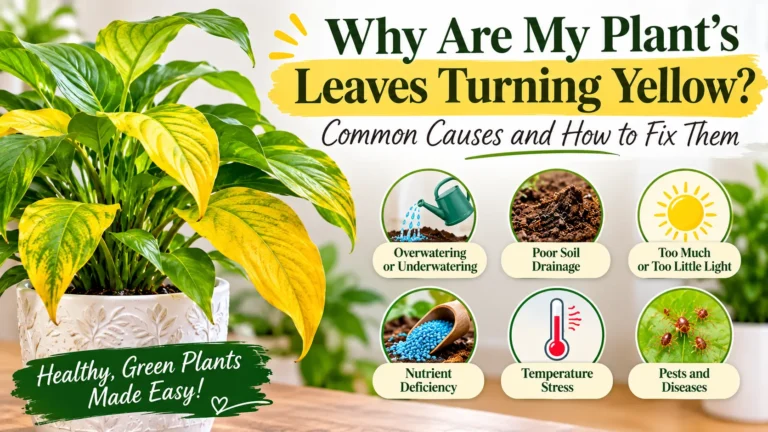
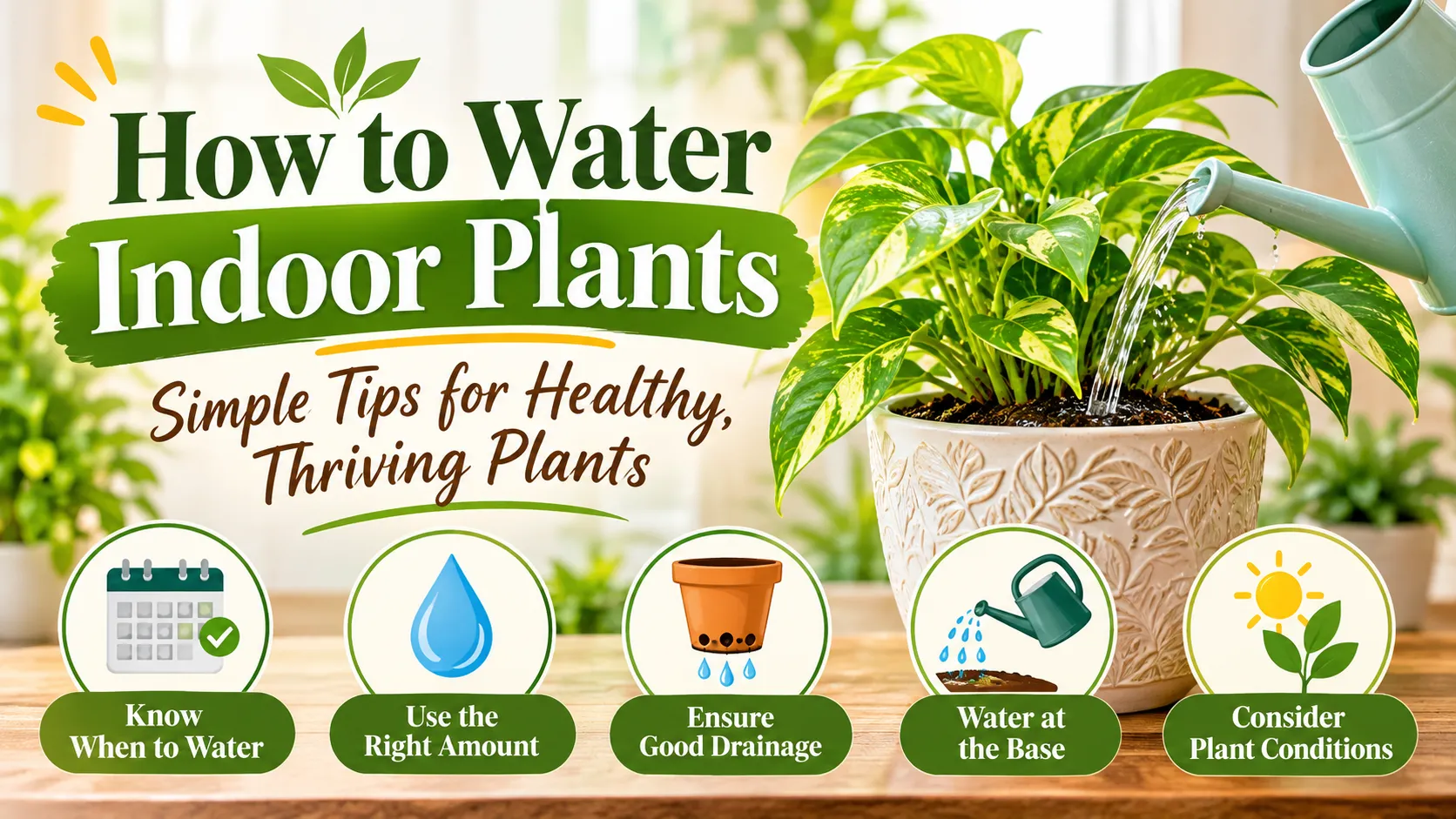

The best way to water indoor plants is to let the soil tell you when, not the calendar. Push a finger an inch or two into the soil, and water only when it feels dry at that depth. Then pour slowly until water runs out of the drainage holes, let it drain, and empty the saucer. That one habit prevents most of the problems beginners run into.
If you have lost plants before, you are in good company. Advice like “water once a week” is too vague to help. This guide gives you simple tests, clear steps and fixes, so you can read your plants instead of guessing.
Watering Needs by Plant Type
Use this table as a starting point, then confirm with the soil checks in the next section. Needs vary by species, pot and home.
| Plant type | When to water | What to watch for |
|---|---|---|
| Succulents, snake plant and ZZ plant | When the soil is dry all the way through | Wrinkled leaves mean thirst. Soft, mushy leaves or stems mean too much water. |
| Most tropical foliage plants | When the top inch or two of soil is dry | Drooping, yellowing leaves and brown edges |
| Moisture-loving plants (ferns, peace lily) | When the top of the soil has just started to dry. Keep it lightly moist, never soggy. | Crispy fronds on ferns. A peace lily that collapses when thirsty. |
| Flowering plants | Varies a lot by plant, so check the care tag and the soil | Dropping buds, wilting and yellow leaves |
If you are still choosing plants, our guide to the best indoor plants for beginners lists forgiving options for new plant owners.
How to Tell When Your Plant Needs Water
No single test is perfect. Combine two or three until you know your plant well.
- Finger test: Push your finger in up to the first or second knuckle. If the soil feels dry and crumbly, most tropical plants are ready for a drink. Succulents want to be drier, so wait until the soil is dry deeper down. In a large pot, the top may be dry while the roots are still wet, so push a wooden skewer to the bottom. If it comes out clean and dry, the whole pot is dry.
- Pot weight: Lift the pot right after a thorough watering, then again a few days later. A dry pot is much lighter, and you will feel the difference with practice. This works best for small and medium pots, since large plants are awkward to lift.
- Soil color: Dry mix often looks lighter than moist mix. The surface can fool you, though, because it may look dry while the soil below is still wet.
- Drooping leaves: A thirsty plant droops, and so does a plant with rotting roots. Always check the soil before reaching for the watering can.
- Moisture meter (optional): Cheap meters can be unreliable and read differently in different soils. Use one as a second opinion, never the only one.
How to Water Step by Step
A thorough soak every so often is usually healthier than small sips every day.
- Check the soil first so you water only when the plant needs it.
- Take the plant to a sink if you can. For larger plants, use a watering can with a narrow spout.
- Pour slowly around the soil. Slow pouring lets water soak in evenly instead of racing down the pot’s edges.
- Keep going until water drains from the bottom. The amount depends on pot size, so let the drainage holes tell you when it is enough.
- Let it drain for ten to fifteen minutes. Bigger pots may take longer.
- Empty the saucer. Roots sitting in water struggle to get oxygen.
Top watering vs bottom watering
Top watering is the method above. It is simple, and it flushes excess minerals and fertilizer salts out of the soil. It suits most plants for everyday use.
Bottom watering means setting the pot in a basin with a few inches of water and letting the soil draw it up through the drainage holes. Leave it fifteen to thirty minutes, or until the top of the soil feels slightly damp. Treat those times as a starting point.
This method is handy for very dry soil and for plants that dislike wet leaves, such as African violets. It does not flush minerals, so give bottom-watered plants a good top watering now and then.
What Kind of Water to Use
Ordinary tap water is fine for most houseplants. A few points are worth knowing.
- Room temperature is best. Very cold or very hot water can shock roots.
- Letting tap water sit overnight helps it warm up and lets some chlorine escape. It will not remove chloramine, which some suppliers use instead.
- Filtered water or rainwater can be kinder to mineral-sensitive plants such as calatheas. Collect rain in a clean container.
- Avoid softened water. Softeners add sodium, which can build up in the soil and harm roots. Use an unsoftened tap or another source.
A white crust on the soil or pot rim suggests mineral buildup. Flush it by watering thoroughly from the top and letting plenty drain out. Brown leaf tips have many causes, including dry air and underwatering, so rule those out before blaming your water.
How Often Should You Water?
There is no single schedule, because the same plant dries out at different speeds in different homes. As a rough starting point, many tropical foliage plants in moderate light need water every one to two weeks, and succulents often go longer. Let the soil check overrule the calendar.
These factors change how fast soil dries:
- Light: Bright light means faster water use.
- Season: Growth slows in winter and speeds up in warm months.
- Pot size: Small pots dry quickly, while large pots hold moisture longer.
- Pot material: Terracotta is porous and dries faster. Plastic and glazed ceramic hold moisture longer.
- Soil type: Chunky, fast-draining mix dries sooner than dense soil.
- Humidity and airflow: Dry, moving air pulls moisture from the soil.
Note how many days a plant takes to dry out after a thorough watering. After two or three rounds, that pattern beats any general rule.
Adjusting for the Seasons
Most plants grow less in winter because of shorter days and lower light. They use less water, so soil stays wet longer. Keeping up your summer pace can drown the roots without you noticing. In spring and summer, growth picks up and you will likely check the soil more often.
Heating and cooling matter too. Central heating dries the air, so soil near a radiator or vent can dry faster. Air conditioning can dry the air as well. Keep checking the soil rather than trusting the season alone.
Notes for hot, dry climates
- Soil can dry very quickly, so check often, especially in small pots and terracotta.
- Move plants back from hot windows, where pots heat up and dry out fast.
- Group plants together so they share a little humidity.
- Water in the morning or evening rather than at midday.
Notes for cooler homes
- Soil stays wet longer and the risk of root rot is higher, so water less often and always check first.
- Water earlier in the day so the surface has time to dry.
- Keep plants away from cold windows and drafts.
Overwatering vs Underwatering
Both mistakes can cause drooping and discolored leaves, which is why they confuse so many people. The soil is your tiebreaker.
| Sign | Overwatering | Underwatering |
|---|---|---|
| Leaf color | Yellowing, often on lower or older leaves | Dull or faded, with brown, crispy edges |
| Leaf feel | Soft, limp or mushy | Dry, crisp, curled or wrinkled |
| Soil | Wet for days, may grow mold or attract fungus gnats | Very dry and hard, may pull away from the pot’s edge |
| Smell | Sour or musty | No unusual smell |
| Drooping | Droops even though the soil is wet. Stem bases may turn dark and soft. | Droops with dry soil and often perks up within hours of a drink |
| How common | More common among beginners, especially in low light and winter | Common when plants are forgotten, in hot rooms or in small pots |
If your plant droops and the soil is damp, suspect too much water. If the soil is bone dry, give it a drink.
How to Fix an Overwatered Plant
Do not panic, and do not add more water.
- Stop watering and let the soil dry out. For a mild case, this alone may be enough.
- Check drainage. Make sure the pot has holes, and empty any saucer or outer pot.
- Give it bright light and gentle airflow, away from harsh direct sun, so the soil dries evenly.
- Check the roots if the soil stays wet or the plant keeps declining. Slide it out of the pot. Healthy roots are firm and pale. Rotten roots are dark brown or black, mushy and smelly.
- Trim rotten roots with clean scissors, cutting away the soft, dark parts.
- Repot into fresh, well-draining soil in a pot with drainage holes. Avoid a pot much bigger than the root ball, since extra soil holds extra moisture.
- Water lightly at first and hold off on fertilizer while the plant recovers.
If the roots look healthy, you do not need to repot. Drying the soil and adjusting your routine is usually enough.
How to Rescue an Underwatered Plant
A thirsty plant is often easier to save than a drowned one, but technique matters.
Very dry soil can shrink away from the pot’s edge. Water poured from above may then run down the gap and out the bottom without wetting the soil. This is often called hydrophobic soil.
- Bottom soak the plant in a few inches of water for twenty to thirty minutes, or until the top of the soil feels damp.
- Or water in rounds. Pour a little, wait a few minutes, and repeat until water drains from the bottom.
- Let it drain well, then return it to its spot.
Do not flood the plant or leave it standing in water to make up for lost time. Dry roots are fragile, and too much water too fast creates a new problem. Crispy brown edges will not turn green again, but new growth shows recovery.
Pots, Drainage and Saucers
- Choose pots with drainage holes. Without them, extra water has nowhere to go and roots can rot quickly.
- Use cache pots wisely. Keep the plant in its plain pot with holes, set inside the decorative pot. Lift it out to water, let it drain fully, then put it back.
- Know your materials. Terracotta dries faster and suits plants that like drier soil. Plastic and glazed ceramic hold moisture longer.
- Empty saucers fifteen to thirty minutes after watering. Plants should never sit in standing water.
If you share your home with a cat or dog, see our guide to pet-safe indoor plants for plants that are gentler around curious animals. Keep saucers, fertilizer and standing water out of their reach too.
Watering While You Are Away
For a short trip of up to a week or so, most plants will be fine. Water thoroughly before you leave and let them drain. Move them back from sunny windows into bright, indirect light so they use less water.
For a longer trip, you have a few options:
- Group plants together away from direct sun and heating vents.
- Ask a friend or neighbor to help, with simple instructions such as “water until it drains, but only if the soil feels dry an inch down.”
- Try a self-watering aid, such as a wick, spike or reservoir pot. Results vary by plant and setup, so test it for a week or two before you travel.
No method is guaranteed, but plants that like drier soil usually handle absences best.
Common Mistakes to Avoid
- Watering on a fixed schedule without checking the soil
- Giving small sips every day instead of a thorough soak
- Using pots without drainage holes
- Leaving water in the saucer for hours or days
- Assuming a droopy plant is thirsty
- Repotting into a pot that is far too big
- Giving up too soon, since plants can take a few weeks to show recovery
Frequently Asked Questions
It depends on the plant, pot, light and season, so check the soil instead of following a fixed schedule. As a rough starting point, many tropical plants need water every week or two, and succulents often go longer.
Water slowly until it drains from the bottom of the pot. The right amount depends on pot size, so the drainage holes are your guide. Empty the saucer afterward.
Both work. Top watering is a good everyday choice because it flushes out excess minerals. Bottom watering suits very dry soil and plants that dislike wet leaves, with an occasional top watering mixed in.
Tap water is fine for most plants. If you see brown tips or white crust on the soil, try filtered water or rainwater, and avoid softened water.
Misting does not water the roots, so it cannot replace proper watering. It raises humidity only briefly. Focus on soaking the soil correctly.
Conclusion
Watering well comes down to a few habits: check the soil, soak thoroughly, let the water drain and never leave plants sitting in a pool. Once you learn how quickly each plant dries, the guesswork fades.
Your next step is simple. Tonight, pick one plant, push your finger into its soil and note how it feels, then check again in a few days. For more ideas on flowers, houseplants and garden styling, visit FloraHomely and keep exploring.