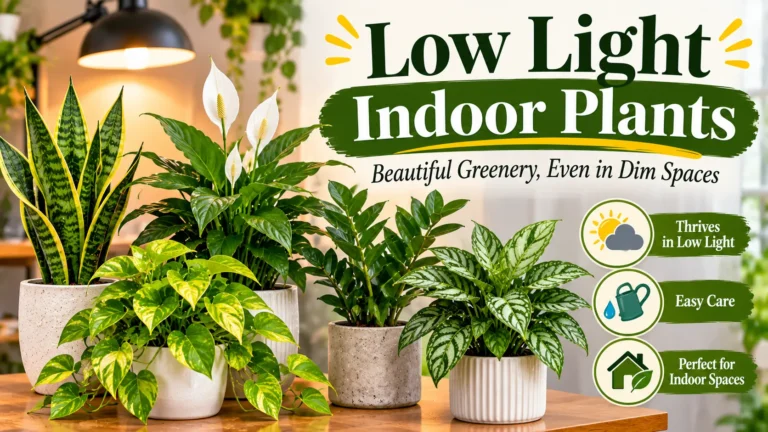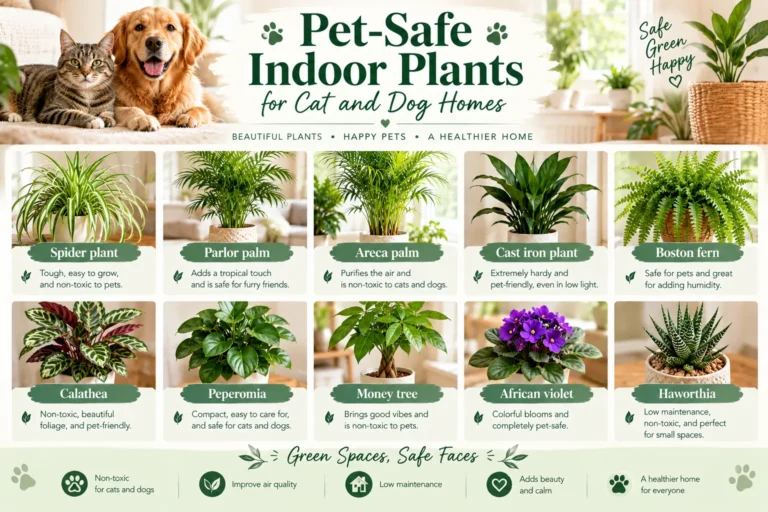
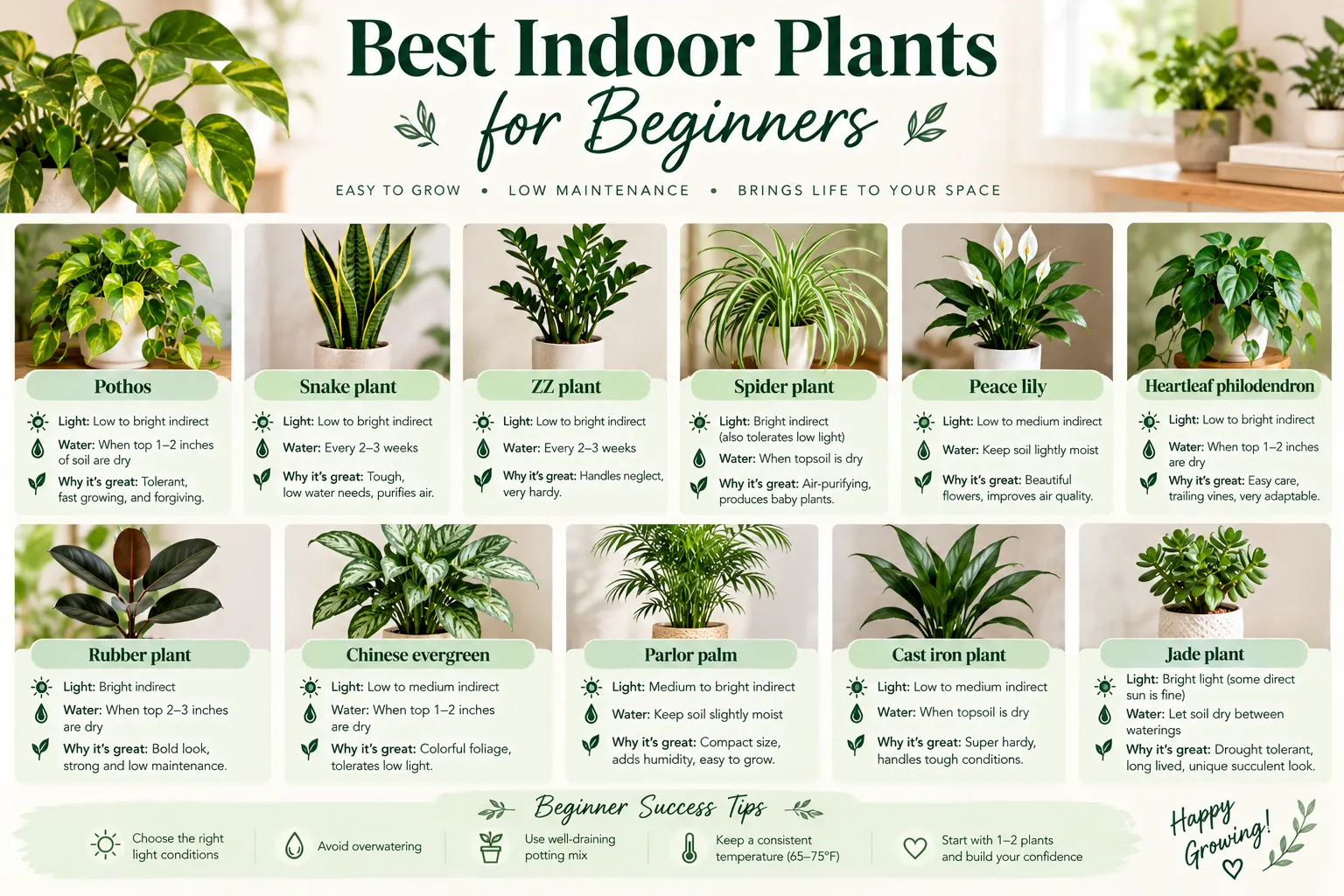

The best indoor plants for beginners are pothos, snake plant, ZZ plant, spider plant and cast iron plant. These easy indoor plants put up with missed waterings, average home light and the occasional bout of neglect. Match the plant to the light in your room and you are most of the way to success. Below are eleven low maintenance houseplants, with light, water, pet safety and the one mistake to avoid for each.
Easy Indoor Plants at a Glance
| Plant | Light | Watering | Pet safe? | Difficulty | Best for |
|---|---|---|---|---|---|
| Pothos | Low to bright indirect | Top 1 to 2 inches dry | No | Very easy | Shelves and hanging pots |
| Snake plant | Low to bright | Soil mostly dry | No | Very easy | Forgetful waterers |
| ZZ plant | Low to bright indirect | Soil mostly dry | No | Very easy | Dim rooms, offices |
| Spider plant | Medium to bright indirect | Top 1 to 2 inches dry | Yes | Easy | Homes with pets |
| Peace lily | Low to medium | Top 1 to 2 inches dry | No | Easy | Indoor flowers in shade |
| Heartleaf philodendron | Low to bright indirect | Top 1 to 2 inches dry | No | Very easy | Trailing greenery |
| Rubber plant | Bright indirect | Top 2 inches dry | No | Easy | Bold floor plants |
| Chinese evergreen | Low to medium | Top 1 to 2 inches dry | No | Easy | Patterned leaves |
| Parlor palm | Low to medium | Top 1 to 2 inches dry | Yes | Easy | Soft, tropical look |
| Cast iron plant | Low to medium | Top 2 inches dry | Yes | Very easy | Dark corners |
| Jade plant | Bright, some direct sun | Soil fully dry | No | Easy | Sunny windowsills |
11 Beginner Houseplants That Are Hard to Kill
1. Pothos
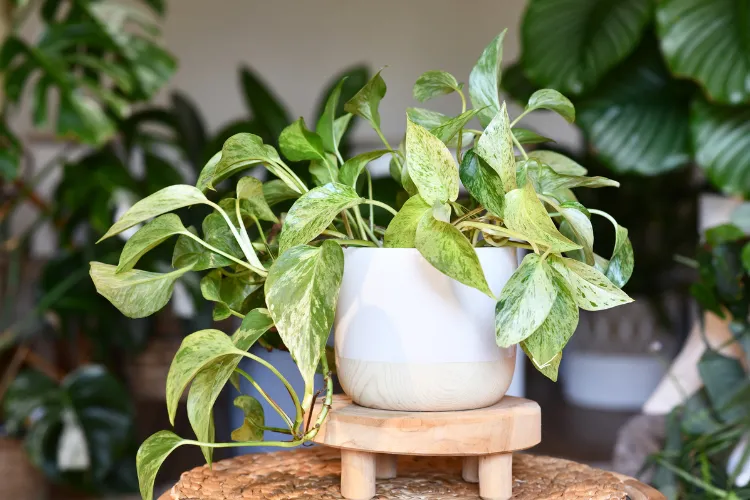
Pothos is the classic beginner houseplant. Its heart-shaped leaves come in plain green or marbled with cream, yellow or white, and the vines trail nicely from a shelf or a hanging pot. When it gets thirsty, the leaves droop, which makes it easy to read.
- Light: Low to bright indirect. Variegated types keep their color best in brighter spots.
- Water: When the top inch or two of soil is dry.
- Humidity: Average home humidity is fine.
- Size: Vines can grow several feet long, and you can trim them.
- Pet safety: Toxic to cats and dogs if eaten.
- Mistake to avoid: Watering on a fixed schedule. Check the soil first.
2. Snake Plant
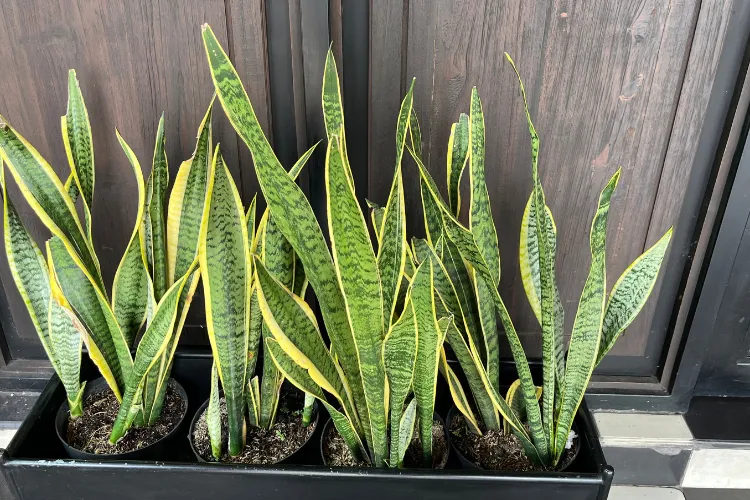
Snake plant has stiff, upright leaves and almost no needs. It stores water in its leaves, so it handles dry spells better than soggy soil. Many varieties exist, from tall and narrow to short and rosette-shaped.
- Light: Low to bright. Growth is slower in dim rooms.
- Water: When the soil is mostly dry, often every two to four weeks, less in winter.
- Humidity: Tolerates dry air well.
- Size: Roughly 1 to 4 feet, depending on the variety.
- Pet safety: Toxic to cats and dogs if eaten.
- Mistake to avoid: Overwatering, which rots the roots.
3. ZZ Plant
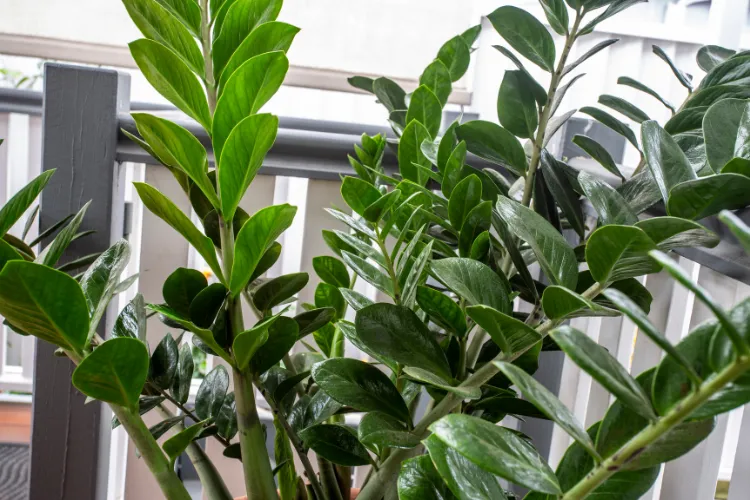
The ZZ plant has glossy, dark green leaves and thick underground stems that hold water. It is one of the most hard to kill indoor plants and suits offices and dim rooms. Growth is slow, so do not expect quick changes.
- Light: Low to bright indirect. Avoid harsh direct sun.
- Water: When the soil is mostly dry. Let it go longer in winter.
- Humidity: Tolerates dry air.
- Size: About 2 to 3 feet.
- Pet safety: Toxic to cats and dogs if eaten.
- Mistake to avoid: Giving it too much water because it looks too calm to need any care.
4. Spider Plant
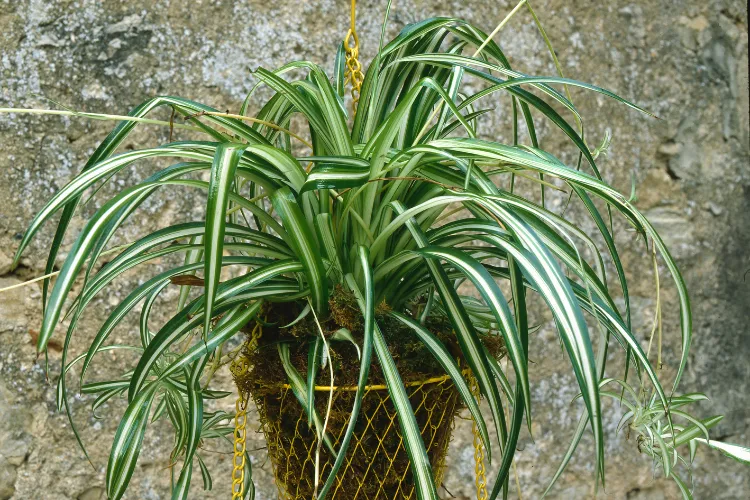
Spider plants have arching, striped leaves and send out small baby plants on long stems. Those babies can be rooted in water or soil, so one plant soon becomes several. It is also one of the safer picks for pet owners.
- Light: Medium to bright indirect. Tolerates lower light but grows less.
- Water: When the top inch or two of soil is dry.
- Humidity: Average is fine. Brown leaf tips often come from dry air, minerals in tap water or irregular watering.
- Size: About a foot tall, with trailing babies.
- Pet safety: Generally listed as non-toxic to cats and dogs.
- Mistake to avoid: Leaving it in direct afternoon sun, which scorches the leaves.
5. Peace Lily
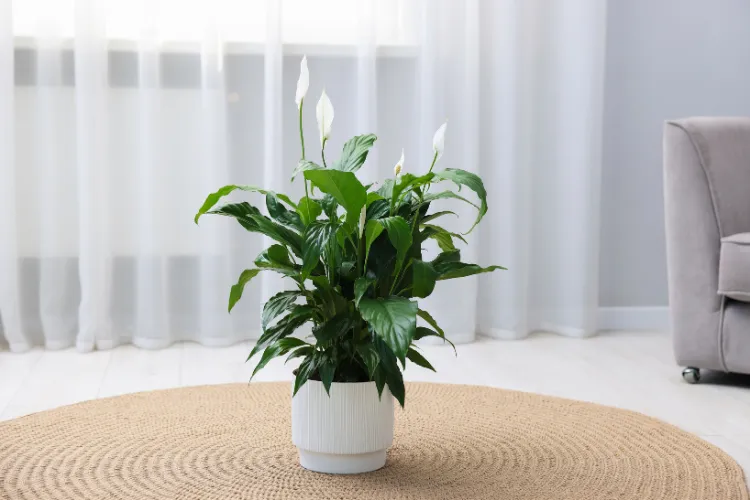
Peace lily has dark, glossy leaves and white blooms that look like hoods. It handles lower light than most flowering plants and droops dramatically when thirsty, then perks up after a drink.
- Light: Low to medium indirect. More light means more flowers.
- Water: When the top inch or two of soil is dry.
- Humidity: Prefers moderate to high humidity but adapts to normal homes.
- Size: About 1 to 3 feet.
- Pet safety: Toxic to cats and dogs if eaten.
- Mistake to avoid: Letting it wilt over and over, which stresses the plant.
6. Heartleaf Philodendron
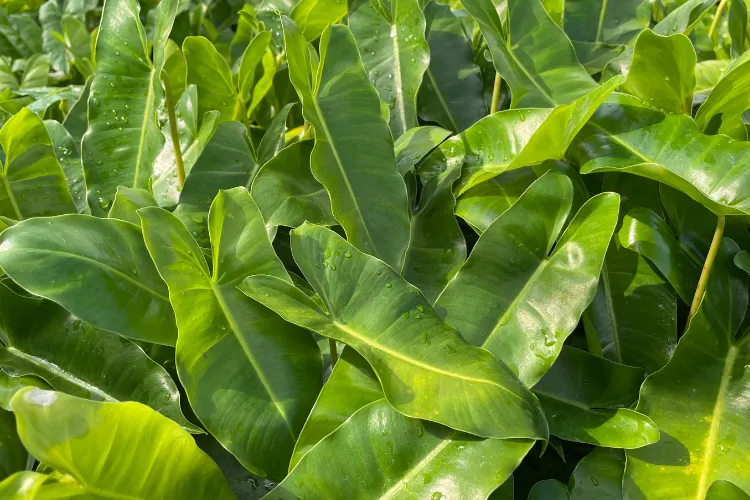
This trailing plant looks a lot like pothos, but its leaves are softer and more heart-shaped. It grows quickly in a bright spot and is happy in a hanging pot or on a high shelf.
- Light: Low to bright indirect.
- Water: When the top inch or two of soil is dry.
- Humidity: Average home humidity is fine.
- Size: Vines can reach several feet.
- Pet safety: Toxic to cats and dogs if eaten.
- Mistake to avoid: Letting the vines get leggy in low light. Move it closer to a window.
7. Rubber Plant
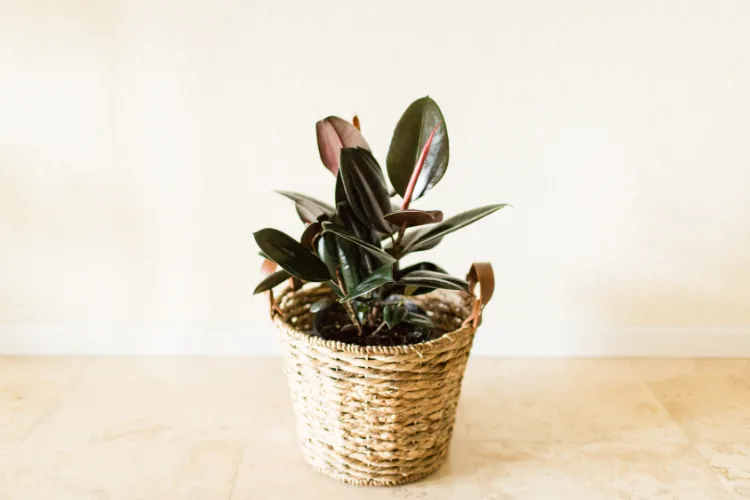
Rubber plant has thick, glossy leaves in deep green or burgundy tones. It makes a strong floor plant and can grow tall indoors. It dislikes being moved around, so choose a spot and leave it there.
- Light: Bright indirect. It tolerates less but may drop lower leaves.
- Water: When the top 2 inches of soil are dry.
- Humidity: Average is fine.
- Size: Often 3 to 6 feet indoors, and sometimes taller.
- Pet safety: Considered toxic to cats and dogs if eaten, and the sap can irritate skin.
- Mistake to avoid: Moving it often or placing it in a cold draft, which can cause leaf drop.
8. Chinese Evergreen
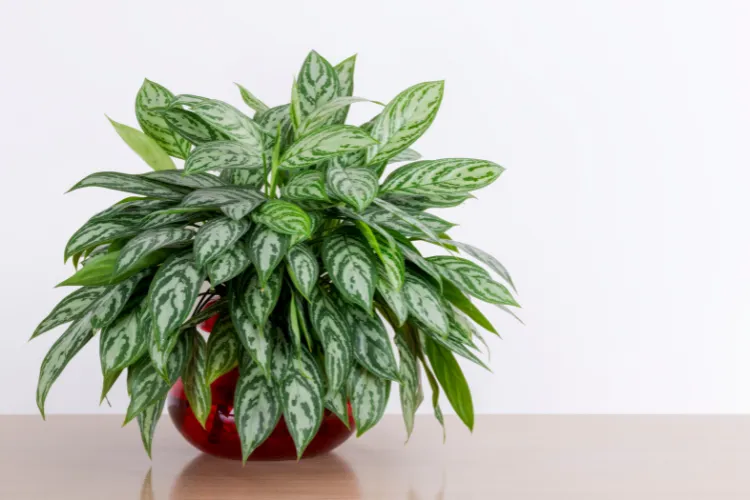
Chinese evergreen (Aglaonema) offers some of the prettiest leaf patterns among easy care indoor plants, with silver, pink and red varieties. Darker green types handle low light best, while colorful ones want a bit more.
- Light: Low to medium indirect.
- Water: When the top inch or two of soil is dry.
- Humidity: Average is fine, though it enjoys a little extra.
- Size: About 1 to 3 feet.
- Pet safety: Toxic to cats and dogs if eaten.
- Mistake to avoid: Keeping it in a cold room, since it likes steady warmth.
9. Parlor Palm
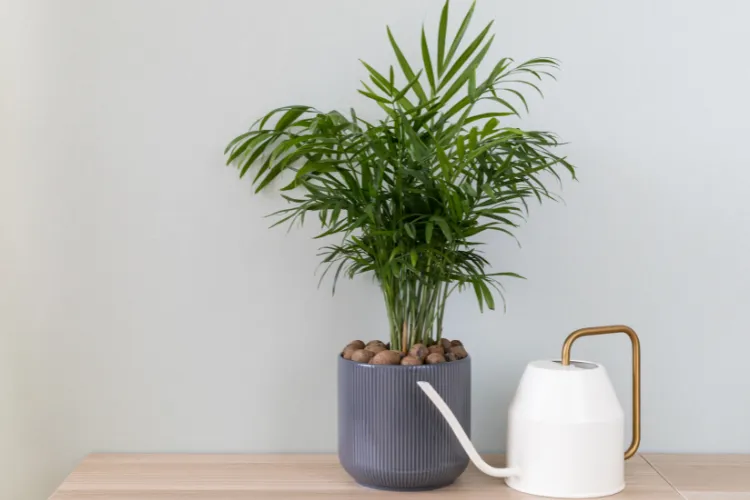
Parlor palm brings a soft, tropical feel without needing a bright room. It grows slowly and stays a manageable size, which suits apartments.
- Light: Low to medium indirect. Direct sun can burn the fronds.
- Water: When the top inch or two of soil is dry. Keep it lightly moist, not wet.
- Humidity: Prefers some humidity, and the tips may brown in very dry air.
- Size: Usually 2 to 4 feet.
- Pet safety: Generally listed as non-toxic to cats and dogs.
- Mistake to avoid: Letting the soil dry out completely for long stretches.
10. Cast Iron Plant
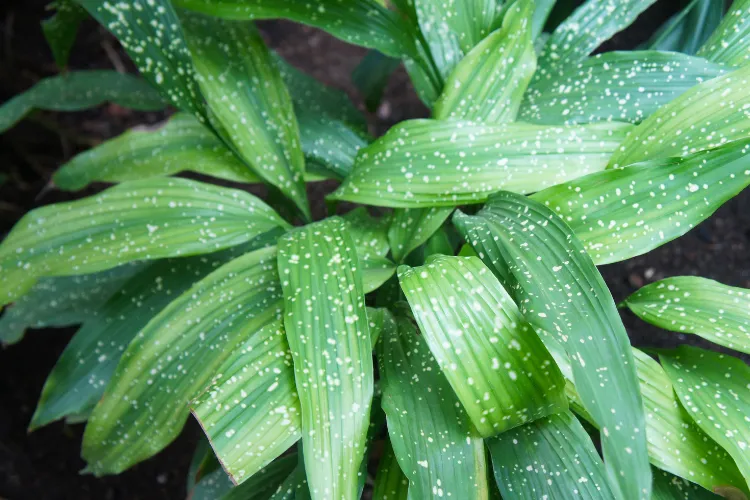
The name says it all. Cast iron plant (Aspidistra) tolerates shade, irregular watering and cooler rooms. Its broad, dark leaves grow slowly, so a bigger pot at purchase gives you a fuller plant sooner.
- Light: Low to medium indirect. Avoid direct sun.
- Water: When the top 2 inches of soil are dry.
- Humidity: Tolerates average and dry air.
- Size: About 2 to 3 feet.
- Pet safety: Generally listed as non-toxic to cats and dogs.
- Mistake to avoid: Overwatering in winter, when growth is very slow.
11. Jade Plant
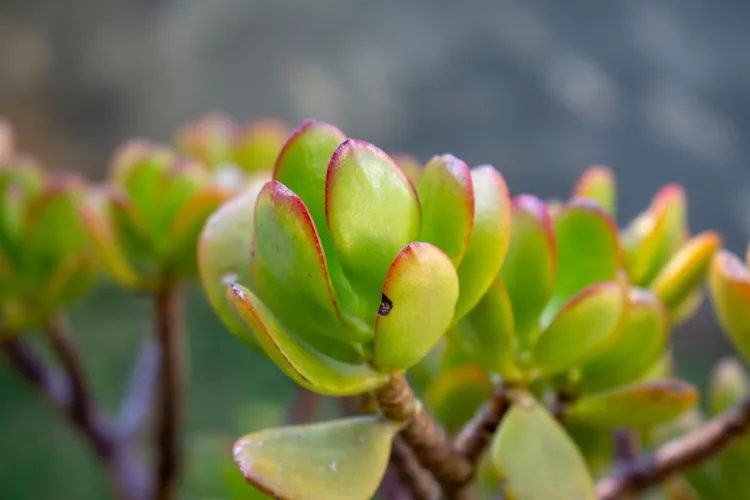
Jade plant is a succulent with thick, fleshy leaves and a small tree-like shape. It likes sun and dry soil, which makes it a good match for people who forget to water.
- Light: Bright, including a few hours of direct sun. Weak light makes it stretch.
- Water: When the soil is fully dry, then water well. Less in winter.
- Humidity: Prefers dry to average air.
- Size: About 1 to 3 feet indoors.
- Pet safety: Toxic to cats and dogs if eaten.
- Mistake to avoid: Watering a little every few days. Soak it, then let it dry.
Beginner-Friendly Indoor Plants That Also Flower
Most flowering houseplants are fussier than foliage plants, and they usually need more light to bloom. Still, a few are manageable for beginners.
- Peace lily: The easiest of the group, and it can bloom in medium light.
- African violet: Likes bright, indirect light and water at the base of the plant. It is generally listed as non-toxic to pets.
- Cyclamen: Prefers a cool, bright room and flowers in the colder months. It is toxic to pets, especially the tubers.
- Amaryllis: Grows from a large bulb and gives tall, dramatic blooms. It is also toxic to pets.
If you enjoy color when the weather turns cold, our guide to winter flowers has more ideas for cold-season blooms.
How to Care for Indoor Plants
Good care comes down to a few habits. Once you learn them, almost every plant on this list becomes easier.
Light
Low light means a spot a few feet from a window or a north-facing room. Bright indirect light means near a window but out of the direct sun rays. If a plant stretches toward the window or loses color, it wants more light.
Watering
Push a finger into the soil. For most plants here, water when the top inch or two feels dry, then water until it drains from the bottom. Dry soil is easier to fix than soggy soil, so wait if you are unsure.
Pots With Drainage
A pot needs holes in the bottom so extra water can escape. If you love a decorative pot without holes, keep the plant in a plastic nursery pot and slip it inside. Tip out any water left in the saucer.
Soil
A standard indoor potting mix suits most of these plants. For jade plant and snake plant, a cactus or succulent mix drains faster and lowers the risk of rot.
Feeding
Houseplants need little food. Use a balanced houseplant fertilizer at half strength once a month in spring and summer. Skip it in winter.
Humidity
Most of these plants cope with normal home humidity. Dry air shows up as crispy leaf tips, especially on parlor palm and peace lily. Grouping plants or moving them away from heaters helps.
Heating and Air Conditioning
Both change how fast soil dries, so the same plant may need water at a different pace in different homes. Always check the soil before watering.
A Note for Hot, Dry Climates
Soil dries faster, so check more often. Keep plants away from air conditioner vents and from hot window glass. Direct afternoon sun can scorch most foliage plants.
A Note for Cooler Homes
Plants grow more slowly and use less water, so water less often. Keep tropical plants away from cold drafts and chilly windowsills. Cast iron plant and snake plant cope best with cool rooms.
What About Air Quality?
Houseplants are lovely, but do not count on them to clean your air or improve your health in a noticeable way. Choose them because they look good and make a space feel alive.
How to Choose the Right Plant for Your Space
Start with the light, since it decides most of the outcome. Then think about your habits and who shares your home.
- Low light: ZZ plant, cast iron plant, snake plant, pothos and Chinese evergreen.
- Bright light: Jade plant, rubber plant and spider plant.
- Bedrooms: Choose calm, quiet plants like snake plant, peace lily or parlor palm. Avoid anything you would need to fuss over at night.
- Small spaces: Spider plant, pothos and heartleaf philodendron can go on shelves or in hanging pots and keep the floor free.
- Busy schedules: Snake plant, ZZ plant and cast iron plant forgive long gaps between waterings.
- Pets: Spider plant, parlor palm and cast iron plant are generally listed as non-toxic. Even so, many pets will chew a leaf out of curiosity, which can upset their stomach. If a pet eats any houseplant, contact your vet for advice.
Whatever you pick, place it where you will see it every day. A plant you notice is a plant you will remember to check. For color through the year, our seasonal flowers guide shows what blooms when, so you can pair a long-lasting houseplant with fresh flowers.
Common Mistakes to Avoid
Overwatering. This is the number one cause of houseplant death. Soggy soil starves roots of air and invites rot. Yellow, soft leaves and a musty smell are warning signs.
No drainage. A pot without holes traps water at the bottom. If you cannot drill holes, use a nursery pot inside a decorative one.
Wrong light. A sun-loving jade plant in a dark corner will stretch and weaken. A shade-lover in a hot window will burn. Watch how the light moves through your room before you buy.
Repotting too soon. Most plants prefer to be slightly snug in their pots. Repot when roots grow out of the drainage holes or the plant dries out almost immediately after watering, and move up only one pot size.
Ignoring pests. Check leaves, especially undersides, when you water. Tiny webs, sticky residue or small white fluff can mean spider mites or mealybugs. Catching them early makes them far easier to deal with.
Frequently Asked Questions
Snake plant, ZZ plant and pothos are the usual answers. All three tolerate irregular watering and a range of light. Snake plant and ZZ plant are especially good if you travel or forget to water.
There is no single schedule. Water when the top inch or two of soil is dry for most plants, or when the soil is mostly dry for snake plant, ZZ plant and jade plant. Light, pot size, temperature and heating or cooling all change how fast soil dries.
Spider plant, parlor palm and cast iron plant are generally listed as non-toxic to cats and dogs. Pothos, snake plant, ZZ plant, peace lily, philodendron and jade plant are toxic if eaten. If your pet chews any plant, call your vet.
Not for long. Even low light plants need some light, and a windowless room is usually too dark. A grow light can work, or you can rotate plants between a dim spot and a brighter one.
Overwatering is the most common cause. Other reasons include too little light, poor drainage or natural aging of older leaves. Check the soil moisture first, then the pot’s drainage.
Conclusion
You do not need a green thumb to enjoy houseplants. You need the right plant for your light, and the habit of checking the soil before you water. This week, pick one plant from the list that fits your brightest or dimmest spot, and start there. For more ideas on styling your home with plants and flowers, explore everything we share at FloraHomely.com.