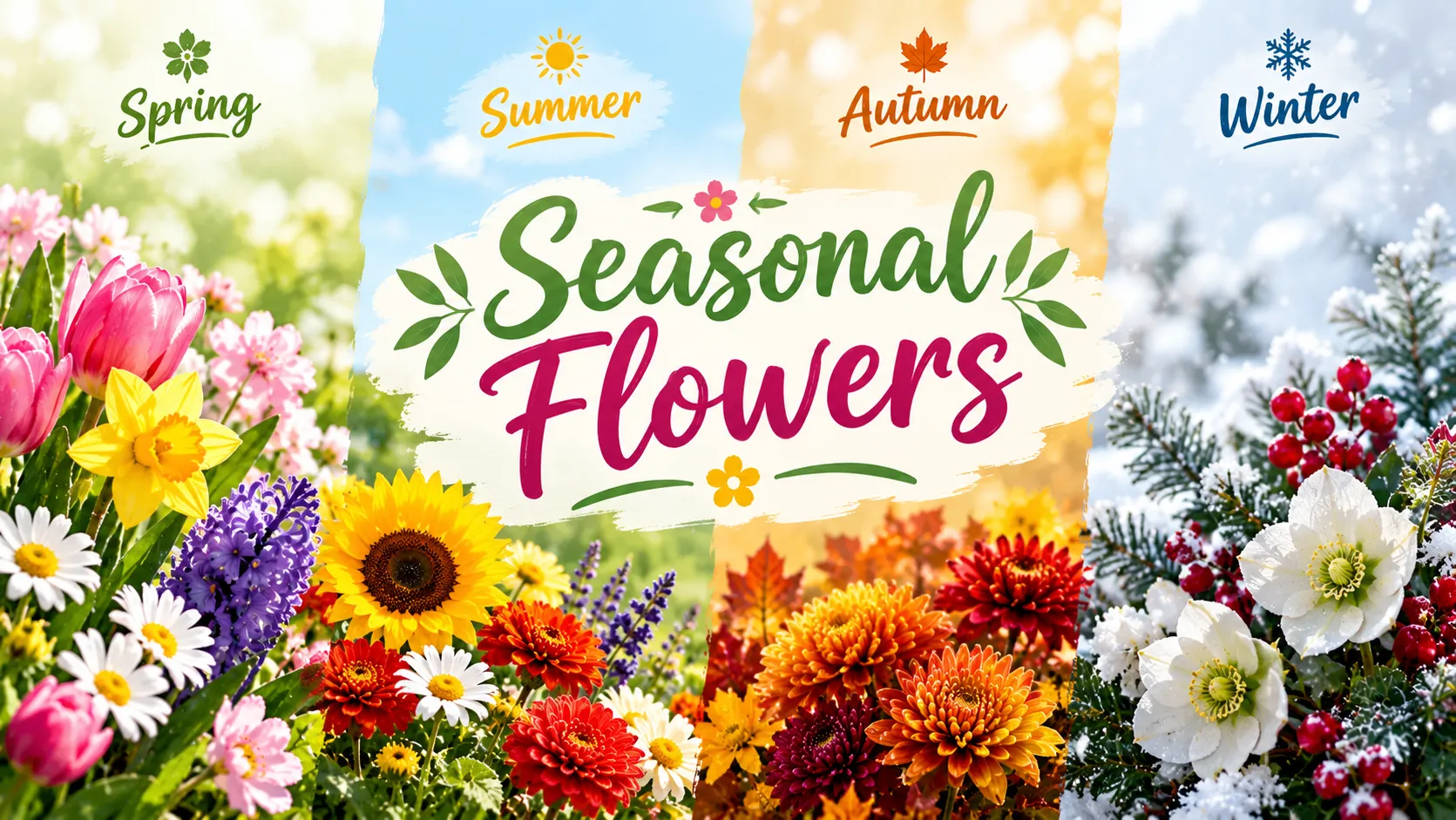

Seasonal flowers are plants that look their best in one part of the year, such as tulips in spring, zinnias in summer, chrysanthemums in autumn and hellebores in winter. If you choose a few reliable plants for each season, something will always be in bloom. Bloom times and frost dates change with your region and the variety you pick, so use the timings below as a starting point and check your own local frost dates.
This is a planning overview. Each season has its own in-depth article with full flower lists and care details, and you will find the links in the matching sections below.
Seasonal Flowers at a Glance
| Season | Top flowers | Best planting time | One key tip |
|---|---|---|---|
| Spring | Tulips, daffodils, hyacinths, pansies, primroses | Bulbs in autumn; pansies and primroses in early spring or autumn | Plant bulbs in layers for a longer show |
| Summer | Zinnias, sunflowers, cosmos, dahlias, coneflowers | Spring, once frost has passed | Deadhead often to keep flowers coming |
| Autumn | Chrysanthemums, asters, sedum, Japanese anemones, ornamental kale | Perennials in spring or early autumn; potted mums in early autumn | Water pots regularly, as autumn wind dries them fast |
| Winter | Hellebores, snowdrops, winter pansies, camellias, cyclamen | Autumn for most; cyclamen as potted plants | Plant near a path or window so you can enjoy them |
Spring Flowers
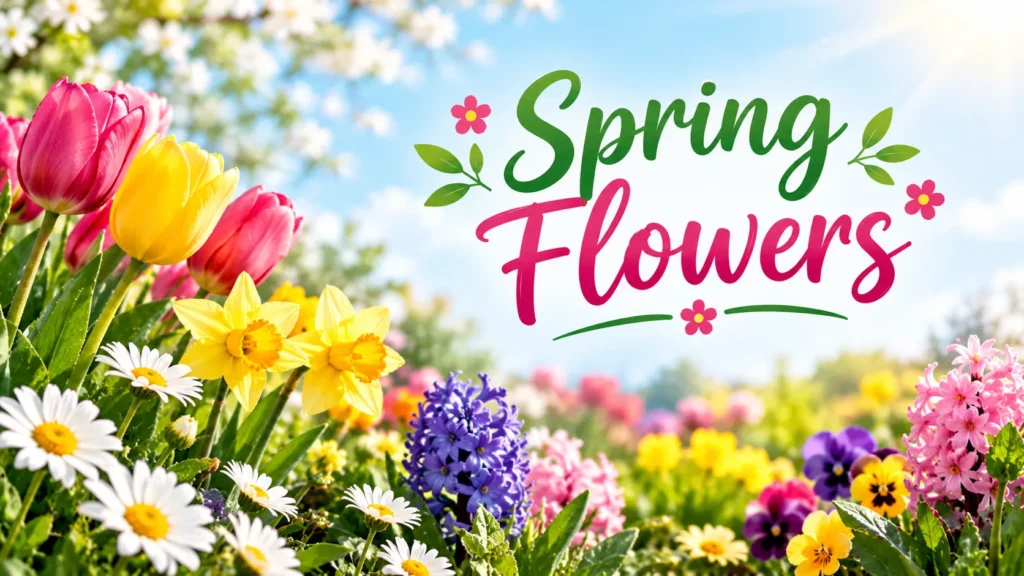
Spring is the easiest season to fill with color because so many bulbs are ready to go. Most spring bulbs are planted the previous autumn, so this season rewards people who plan ahead. Blooms usually start with early bulbs and finish with later tulips and perennials, though the exact timing depends on your climate.
Top picks:
- Tulips: Bloom from early to late spring, depending on the type.
- Daffodils: Among the earliest bulbs, and they come back reliably year after year.
- Hyacinths: Short, upright and strongly scented, which suits pots and borders.
- Pansies: Cool-season flowers that handle chilly mornings well.
- Primroses: Compact plants that suit shady corners and containers.
Practical tip: Plant bulbs in layers, with later bloomers deeper and early bloomers closer to the surface. This stretches the show over several weeks.
Climate notes: In cool climates, spring bulbs are planted in autumn and bloom as the soil warms. In warm climates, some bulbs such as tulips and hyacinths may need a chilling period before planting, so check the supplier’s advice for your area.
Pet safety: Tulips, daffodils and hyacinths can be toxic to cats and dogs, especially the bulbs. Keep them out of reach of curious pets and plant them where animals do not dig.
For the full list with care details, read our article on spring flowers.
Summer Flowers
Summer is the season of bold, sun-loving blooms. Many of these plants are annuals that grow quickly from seed and flower for months. Others, like dahlias and coneflowers, are tender or hardy perennials that return in the right conditions.

Top picks:
- Zinnias: Easy from seed and very generous with flowers.
- Sunflowers: Fast growers that add height and a cheerful look.
- Cosmos: Airy, daisy-like blooms that cope with poor soil.
- Dahlias: Large or small flowers from midsummer into autumn.
- Coneflowers: Tough perennials that attract bees and butterflies.
Practical tip: Deadhead spent flowers regularly. Removing faded blooms tells most summer plants to keep producing new ones.
Climate notes: In cool climates, sow or plant summer flowers after the last frost. In hot climates, give plants some afternoon shade and water deeply in the morning, since extreme heat can slow flowering.
Pet safety: Sunflowers, zinnias and cosmos are generally listed as safe for cats and dogs. Dahlias can cause mild stomach upset, so it is worth keeping pets away from them.
Our article on summer flowers covers each plant in more detail, including spacing and watering.
Autumn Flowers
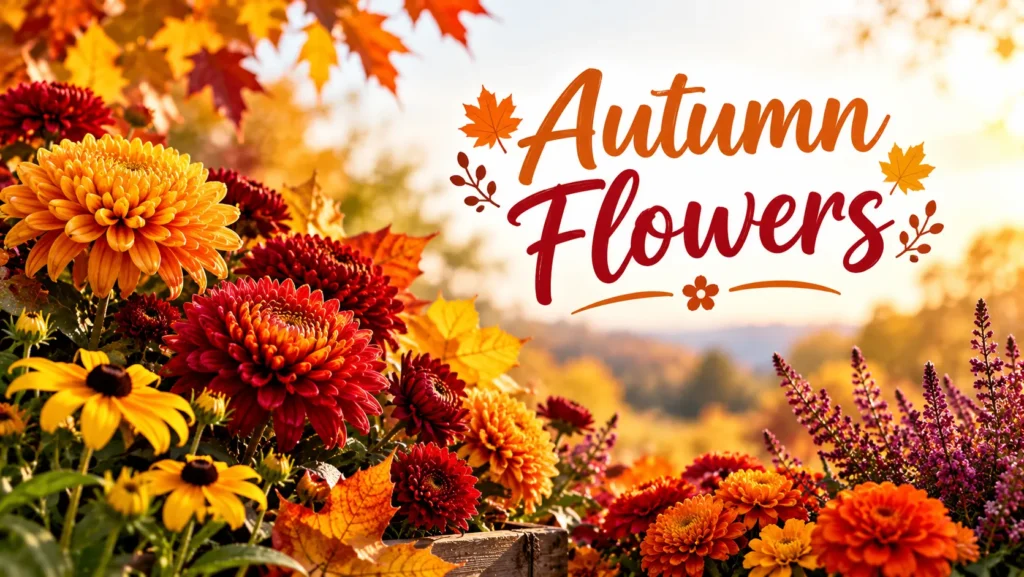
Autumn gardens are often overlooked, which is a shame because this season can be rich with warm tones. Many autumn bloomers are perennials that flower as days shorten and nights cool. Late dahlias and some summer flowers also carry on until the first hard frost.
Top picks:
- Chrysanthemums: The classic autumn pot plant, available in many colors.
- Asters: Starry, purple, pink or white flowers that feed late pollinators.
- Sedum: Succulent-leaved perennials with flower heads that deepen in color.
- Japanese anemones: Graceful, airy blooms on tall stems in late summer and autumn.
- Ornamental kale: Grown for its frilly foliage rather than flowers, it adds color when the weather cools.
Practical tip: Buy potted chrysanthemums when buds are showing but not fully open, so you enjoy the display for longer at home.
Climate notes: In cool climates, autumn flowers should be planted early enough to settle in before frost. In warm climates, autumn can be the best planting season, with mild days that suit new plants.
Pet safety: Chrysanthemums are toxic to cats and dogs, so place pots out of reach. Asters are generally considered safe.
You can find more varieties and care advice in our article on autumn flowers.
Winter Flowers
Winter flowers are fewer, but they matter most because color is so scarce. Many bloom in the coldest months because they have adapted to low light and chilly soil. In very cold regions, some will only flower once the worst frost has passed, while mild climates see a longer show.
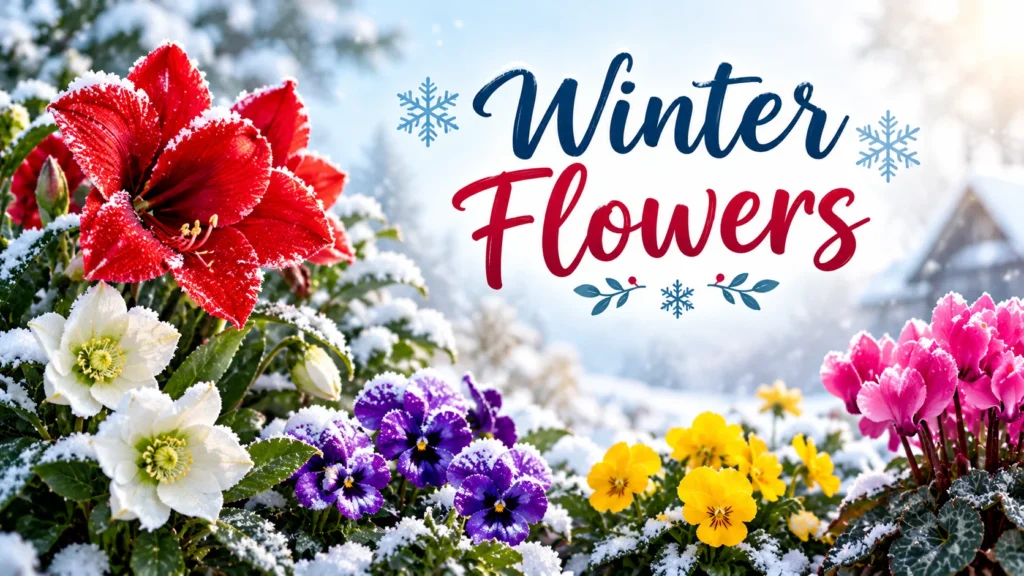
Top picks:
- Hellebores: Nodding flowers that often appear in late winter and tolerate shade.
- Snowdrops: Small white bulbs that signal the end of winter in cool climates.
- Winter pansies: Hardy, cheerful and suited to pots and window boxes.
- Camellias: Evergreen shrubs with showy flowers from late autumn to spring, depending on variety.
- Cyclamen: Compact plants that suit sheltered patios or bright indoor spots.
Practical tip: Plant winter flowers where you will see them from a window or doorway. You are less likely to go outside to admire them in cold weather, so put them where you walk every day.
Climate notes: In cool climates, protect pots from hard freezes and choose hardy plants such as hellebores and snowdrops. In warm climates, winter can feel like a second spring, with pansies, violas and camellias in full bloom.
Pet safety: Hellebores, snowdrops and cyclamen can be toxic to pets, so keep them out of reach. Pansies and camellias are generally listed as safe, but check before bringing any plant home if you have animals.
For more options and care details, see our article on winter flowers.
How to Plan a Garden with Color All Year
Year-round color comes from planning, not from buying more plants. A simple system keeps it manageable, even in a small garden.
Layer bulbs, perennials and annuals
Each plant type does a different job. Bulbs give early color, perennials form the backbone, and annuals fill gaps with fast, bright flowers.
- Bulbs: Plant in autumn for spring color, and tuck them between perennials so their fading leaves are hidden.
- Perennials: Choose a mix that flowers at different times, so the border changes through the year.
- Annuals: Use them to fill empty spots and add pops of color in summer.
Overlap bloom times
Aim for at least two or three plants in flower at any moment. When one finishes, the next should already be starting. Early-spring bulbs, late-spring perennials, summer annuals and autumn asters hand the show along neatly.
Choose plants that bridge seasons
Some plants bloom across two seasons or look good even when not flowering. Dahlias flower from summer into autumn, pansies can bloom from autumn through spring in mild areas, and sedum offers structure all year. Evergreen shrubs and ornamental grasses also keep the garden looking alive between blooms.
Keep a simple planting calendar
Write down what blooms when, and where you see gaps. A basic list by month is enough. Note your last and first frost dates and when each plant flowered this year. Next season, you will know exactly where to add something.
Seasonal Flowers for Pots and Balconies
A seasonal flower garden does not need a yard. Pots let you rotate plants through the year, so small spaces can still feel full of life. The idea is to swap containers as each season changes, rather than keeping the same plants all year.
- Spring: Plant bulbs in autumn and let them bloom in pots, or add pansies and primroses.
- Summer: Replace spent spring plants with zinnias, marigolds or petunias, depending on your light.
- Autumn: Add potted chrysanthemums and ornamental kale for warm tones.
- Winter: Choose hardy pansies, cyclamen or small evergreens in sheltered spots.
A few practical points help balcony gardens. Use pots with drainage holes and good potting mix, and remember that containers dry out faster than soil in summer and can freeze more easily in winter. On a windy balcony, choose lower, sturdier plants and place the pots in groups so they shelter each other.
If space is tight, keep one or two large pots as permanent anchors and swap in seasonal plants around them. This is easier than redoing everything four times a year.
Common Mistakes to Avoid
- Planting for one season only: A garden full of spring bulbs looks bare by midsummer. Plan at least one flowering plant for every season.
- Ignoring frost dates: Planting too early risks losing tender plants. Check your local dates before you start.
- Buying only what is in bloom at the store: Plants flowering at the nursery may finish soon after you bring them home. Read the label for bloom time.
- Forgetting that bulbs need planning: Spring bulbs go in the ground the autumn before. Buy them early so you do not miss the window.
- Cutting bulb foliage too soon: Leaves feed the bulb for next year. Let them yellow naturally before removing them.
- Overcrowding: Plants need space and airflow. Follow spacing advice on the label.
- Overlooking pets: Several popular seasonal flowers are toxic. Check each plant if you have cats, dogs or small children.
Frequently Asked Questions
Seasonal flowers are plants that bloom naturally at a certain time of year, such as spring, summer, autumn or winter. Planting by season means your flowers are growing when conditions suit them best, which usually leads to healthier plants and better blooms.
In most climates, yes, with careful planning. Choose plants for each season and overlap their bloom times. In very cold regions winter color is limited, so hardy options like hellebores and winter pansies, or indoor plants, help fill the gap.
Zinnias, marigolds and sunflowers are forgiving summer choices, while daffodils and pansies are easy for spring and winter. Pick plants that suit your light and climate, and start with just a few.
Most spring bulbs are planted in autumn, a few weeks before the ground freezes in cool climates. In warm climates, some bulbs need a chilling period first, so follow the advice that comes with the bulbs.
Sunflowers, zinnias, pansies and snapdragons are generally listed as non-toxic to cats and dogs. Tulips, daffodils, hyacinths, chrysanthemums and lilies can be harmful, so keep them out of reach. If you are unsure about a plant, ask your vet.
Start Your Planting Calendar
You do not need to plan the whole year at once. This week, pick the season that is currently weakest in your garden or on your balcony, and choose two or three flowers from the list above to fill it. Write down their bloom times, and build from there.
For more ideas on flowers, houseplants and garden styling, visit FloraHomely.